Approx. 4 min read.
Australia is a land of sweeping contrasts.
Drought and deluge, flame and flood, abundance and absence — often in the same season.
It’s beautiful, yes. But it’s also brutal.
And yet, most homes are designed for “normal.”
A flick of the switch, a twist of the tap, a trip to the shop.
We outsource survival to invisible systems, trusting that power will always flow, water will always run, and shelves will always be full.
But what happens when the invisible fails?
Normal Is Not Reliable
Recent years have shown us just how thin the veil of normality can be. Bushfires that moved faster than forecasts. Floods that swallowed roads. Empty supermarket shelves. Boiling water advisories. Power grids under pressure. Not dystopia — just Tuesday in Australia.
Resilience isn’t a luxury. It’s not a prepper’s fantasy or a retreat from society. It’s a form of care. A form of freedom.
Resilience Is Built, Not Bought
You don’t need a bunker. You need a plan. You need to know where your water comes from — and what you’ll do when it doesn’t. You need a few days of light when the poles go down, and food when the trucks don’t roll in.
This isn’t fear. This is responsibility. This is love for your family made tangible — in water tanks and fire buffers and battery banks.
Designing for the Inevitable
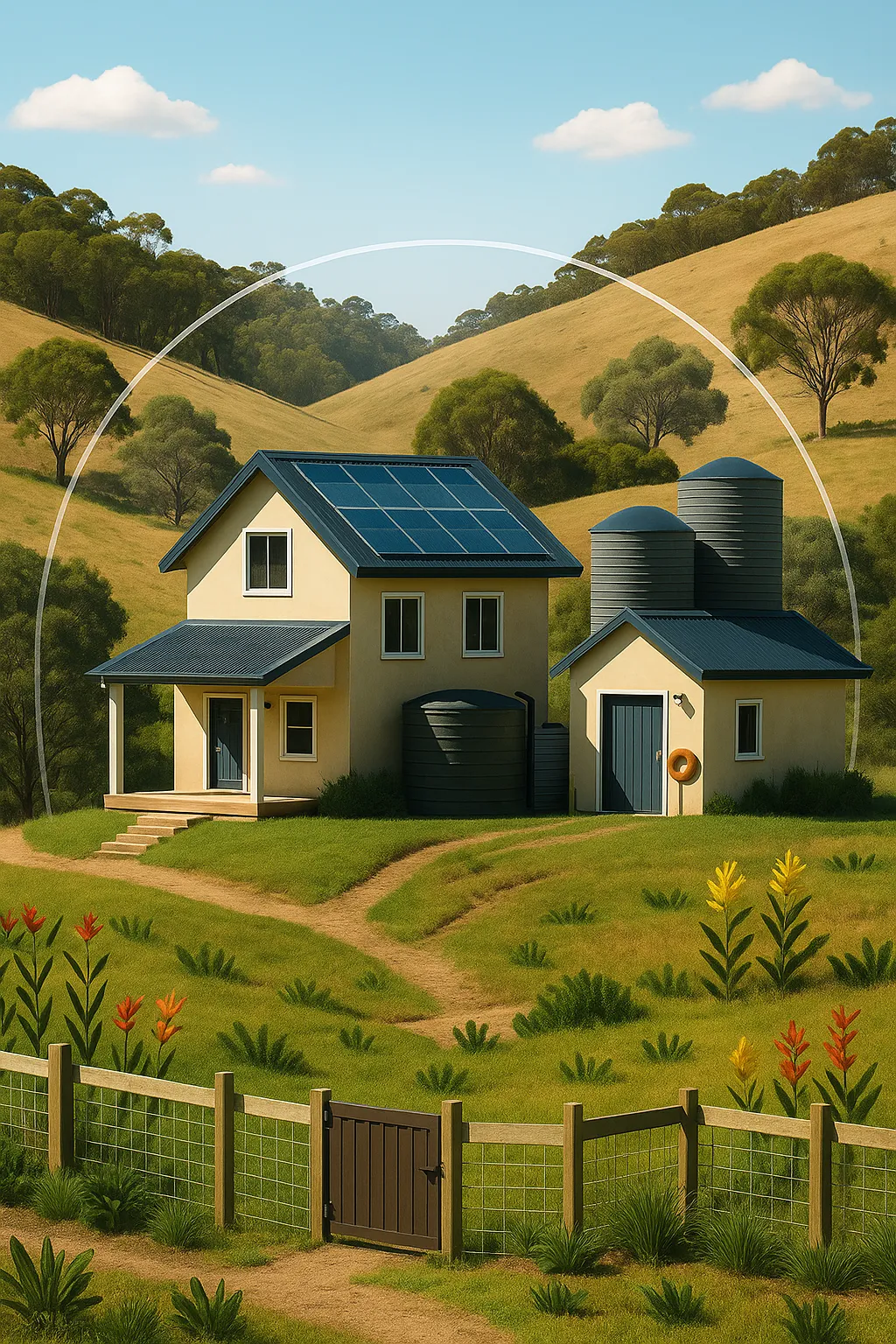
The trick isn’t to plan for every disaster. The trick is to design your life so you can bend without breaking. A roof that sheds embers. A tank that gathers rain. A solar panel kissed by a late-summer sun, quietly charging a future.
The Moral Case
To be resilient is to be less of a burden. On neighbours, on systems, on the planet. When we build redundancy into our homes, we free up capacity elsewhere. We become the ones who can offer help — not just need it.
Begin Now, Begin Small
Start with light. Start with water. Start with a checklist. Then grow into systems that serve your unique landscape. In the end, resilience is less about gear and more about grace. It’s the quiet strength that says, “Whatever comes, we’re ready.”